Showing posts with label Politics. Show all posts

Friday, March 10, 2017

Let's talk about health care

I'm old enough to remember 10 years ago, when health care was about insurance, and insurance was so valuable it was often reason enough on its own to take a job.

I'm an expat enough that I've been out of the country for most of the time the Affordable Care Act has been in effect.

I'm cynical enough to understand that "access to health care" is basically meaningless when it is shorthand for, "if you can afford it, you can buy it."

A lot of people smarter than I have written on this topic, so I'll keep this short.

Health care is not a luxury (like, say, a new iPhone) America as a country has strong incentives to have a healthy population--there is close correlation between health and economic productivity. All Americans benefit.

So given that, how do we make sure Americans are healthy? For most of my life, the answer was to have a government program that paid for health care for the very poor (Medicaid) and the old (Medicare), and everyone in between was left to fend for themselves. This was fine as long as you could either a) afford to pay your medical bills on your own, b) could afford insurance on your own or c) had a job that offered insurance.

The reality was that the simple expense of medical care and insurance was too much for many, and so millions of Americans went without either. This is an absurd thing to type considering the U.S. has the largest economy in the world by a huge margin, but there we were.

The Affordable Care Act tried to address that by (in simple terms) making health insurance mandatory and creating a system in which it was affordable. The mechanisms for both are of course incredibly complex. The results were pretty easy to see, with the number of uninsured Americans dropping dramatically.

The current plan to replace the ACA, for no real reason other than partisan spite, uproots a lot of what made the ACA work. It promises "access to health care," and its chief proponent, Paul Ryan, said the problem before was that healthy people subsidize sick people, which is both literally true and spectacularly dumb, considering people whose houses don't burn down subsidize firefighters to help those whose houses do.


Anyway. This brings me to Hong Kong, where I live now. Life expectancy and health in general are good in Hong Kong despite occasionally awful pollution. A large part of that is the public health system, which is staffed by well-trained doctors and is free. There is a private health care system too, as well as an insurance market.

First of all, it's important to note that even though the U.S. economy dwarfs that of Hong Kong, the 'Kong has extra money around because it does not fund a military. The current public medical system is largely a legacy of British colonial times but it is funded by current taxes, and Hong Kong, which is terrible at budgeting efficiently, always has money left over anyway.

The public system is effective. What it's not is friendly. You will feel like a number, you often will wait a long time for non-emergency care and you will not feel particularly comforted by your surroundings. You will also pay nothing, or very little, for your care. (Delivering a child and spending a few days in the hospital costs, all-in, about US$30.)

The private system is effective too--and friendlier, although bedside manner isn't really a thing in Hong Kong. What it's not, is cheap... let alone free. Getting a dose of oral vaccine for your kid at a no-frills clinic will run you about US$250 plus a consultation fee.

In my experience, doctors in the United States are more engaged with their patients and think more critically about their cases. A system that gives all Americans access to their expertise would benefit everyone.

You can see where I'm going with this. A system like Hong Kong's that allows private medical businesses to offer services while also guaranteeing free medical care to anyone who needs it--not just the poor or old--would be a huge positive for America. This is not a full-throated endorsement of medical care in Hong Kong, which can be frustrating and demeaning and even ineffective, but of the system that gives everyone access to a doctor.

Replacing the ACA because it was "the other guy's" idea is dumb and harmful. Improving it so every American gets health care, not just access to it is not.

In my experience, the latter can be done. It's a shame the Congressional majority is too focused on negative partisanship to realize that, or even try.

Tuesday, November 8, 2016

Historic elections

No matter how things go on Nov. 8 in the U.S., the outcome will be a big deal. Either we'll have the first female president, or the first authoritarian; in either event, there is no putting the genie back in the bottle.

As we head toward the vote count, I remember the first "big deal" election I was a part of: 2000, Bush vs. Gore. I was working in Florida, so really about as close to a front-row seat as you could ask. But would you actually want a front-row seat? Here's how my day went down.

At work by 1:30 p.m. That's because our first edition closed at 3:30 p.m. (The St. Petersburg Times basically invented aggressive zoning), not because of any planning for electoral craziness.

Of course as the day went on, electoral craziness materialized. The race was tied! Florida's electoral votes would decide the presidency! But there was a wrinkle: no one knew exactly who had won Florida. Before the first statewide edition closed, however, the networks all called the state for Gore. Whew. Front-page headline could announce his victory, right?

You know how this goes. Those calls were based on exit polls, which turned out to be juuuust a bit outside. The state was anyone's to win, and the front page was ripped up for the final edition.

More profanity-focused options were discarded, apparently.


By this time, back in the days where continuous online coverage was a rarity, our work was more or less done. There would not be any more news before the presses rolled again that night. Off to an election night party at the house of a Co-Worker of the Blog!

Except... it was less of a party and more of an extremely boozy cable news watch marathon. None of us had seen anything like this. That feeling didn't change as the night went on. This was more than a close race, it was a total mystery, and as young journalists I think we were expecting someone, somewhere, to come up with an answer while we watched. That didn't happen.

And when I woke up the next morning, fully clothed, on my couch (OK, I was 22, it was a futon) at home the next morning with MSNBC still on, I was no closer to knowing what was going on than I was the night before, although the size of my headache suggested something terrible had happened. There was also an inexplicable shoeprint--my shoe, fortunately--about 7 feet up on the inside of my front door.

The next few months, well, you know how the story unfolded. Vote counting went on for weeks, chads were hung, court cases were heard, and eventually George W. Bush was officially the president.

It was all literally unprecedented. All of it. And Election Night 2000 remains a singular event in my career and in my memory.

This time around, Election Night in America will be Election Morning in Hong Kong. If there's any sweating out of results, it will happen at an inconvenient time for drinking. Let's hope there's no need for anything but a sigh of relief and removing the fivethirtyeight.com bookmark from our browser.

Until 2020.

Tuesday, October 4, 2016

Information isn't what it used to be

Oh, hello, gentle reader. I didn't see you standing there. Please, come in, sit, make yourself comfortable. It's been a while, I know.

Since my last post, the B-21 has gotten a name, the Raider, which narrowly beat out Nukey McMeltface, I'm told. The 2016 presidential election is well under way. And the Blog Family has grown by one.

Look at that paragraph. The three items there are not equal in value--at least not to me!--but are presented as though they do.

And this is what has been driving me nuts about 2016. I'm not the first person to spill ink, real or electronic, on this and I'm confident I won't be the last. But the fact that statements are more and more being treated as equally true regardless of source is a real, creeping problem with public discourse. "I read it on Twitter" should never have the same weight as "I read it in the Wall Street Journal" and certainly not "I saw it myself." Opinions aren't facts. Innuendo isn't argument.

This isn't limited to fallible humans. Today, a Google search will get you this result:

No, Google. Bad Google.

Happily, a Snopes link is among the top results, but c'mon, Google... that's not news. It's, put charitably, rumor and speculation. (Russia Today is a propaganda arm of the Russian government; True Pundit is a conspiracy website.) A more cynical person might call it outright disinformation. The most cynical person might say this is a result of how we are all subtly being encouraged to only treat as "fact" things that align with our ideology.

So look. All I'm saying is that all information is not created equally. Fact is not subjective. There is such a thing as getting it right, and the *best* sources of information will admit their mistakes.


But please. Don't just take my word for it.

Tuesday, December 8, 2015

Armed and dangerous

Let's see if this is possible. Let's see if I can write brief post about gun control that's actually brief.

It can be tough to sort through all the noise to get any signal on this issue. You have probably seen a lot of information thrown around since the San Bernardino shootings: That 2.5 million crimes are averted every year because of guns (laughable); that gun crime is way down since 1993 (true but misleading; the numbers have been same since 1998 or so); that a gun ban in Australia made a big impact in gun deaths there (complex, but probably accurate); and even that it's unthinkable to abridge a constitutional right (also laughably untrue--try buying an RPG or shouting "fire" in a crowded theater).

All of that obfuscates the one fact that is literally undeniable: Americans are killed by guns at an appalling rate. Way higher, UNBELIEVABLY higher, than peer nations... and even some third-world countries. To say this is untrue is to share a Venn diagram with moon landing hoax believers.


That's a problem. A public health problem, in that people are dying who shouldn't be. A human problem, in that sons, daughters, mothers, sons are being taken from their families. And even an economic problem, in that all that those people could contribute--from the big, like starting companies, to the small, like paying sales taxes--is obliterated forever.

Why are we so unwilling, as a country, to address it?

I think the biggest issue is that the problem seems more or less insurmountable now. Distractions like "let's fix mental illness!" ignore the glaringly obvious correlation between gun deaths and the number of guns. Yet no one is seriously proposing confiscating all guns. That's because it would be constitutionally questionable, at best, and also because there are so many guns. The NRA has spent the last 40 years  convincing America that we need more guns as "tools of macho vigilantism and even insurrection." Tons of other Americans, including me, have paid money to shoot firearms for fun, or own them at home for the same reason. So the heavily armed horse is way, way out of the barn, and isn't coming back.

It's easy at this point in the conversation to just throw up your hands and say, "Screw it! Nothing can be done." But that's a pretty lame attitude. That's not how we cured smallpox, integrated schools or made cars safer.

So here are some things we could do:
-Require liability insurance. It has been proven with other crimes that making them just slightly less convenient (or harder) to commit deters them. If, as when you buy a car, you have to obtain insurance, that will dent sales. It will also theoretically create economic incentives for insurance companies to find ways to make guns safer, for instance by funding more advanced smart gun systems.

-Mandate a much longer waiting period for buying a gun. Include an onerous background check. Training. The result is fewer gun sales, and guns in the hands of theoretically more stable, responsible owners.

-Make concealed carry illegal. This is probably the most controversial idea. But if we're serious about stopping mass shootings, we should understand that "good guys with guns" are unlikely to prevent such carnage. And worse, they present a complication to responding officers, who must now sort out who are the good shooters and who are the bad shooters before reacting. (Note that this is why, in the Oregon campus shooting, an actual armed student kept his gun holstered.) The U.S. is a modern nation, not Somalia, and if you feel scared enough to arm yourself for everyday life--and you're not in the military or in law enforcement--I would suggest that your money would be better spent on counseling.

-And this seems like the least-controversial idea anyone could suggest: Allow the CDC to study gun violence unfettered. Since 1996, the agency hasn't been able to examine gun violence with any kind of rigor. (Thanks, NRA!) Getting good, unbiased data on gun violence is the first step toward addressing it like the public health and safety issue it is.

The auto industry is a great example of how safety has been regulated into both the product and the user. It would be fantastic to see the same type of results with guns:


But nothing will change if we continue to just shrug our shoulders and complain that it's too big of a problem or too big of a burden on gun owners. Nothing resembling those two obstacles have stood in politicians' way as they happily tried to legislate  solutions to--just pulling an issue out of thin air here--terrorism. Terrorism, yes, which has killed exponentially fewer Americans since 2001 than gun violence. And no amount of gut-churning violence seems to be weighty enough to act as an inflection point. You would think the massacre of a bunch of children by a guy using legal firearms would have given us a push in the right direction. But that was years ago, and here we are again.

Like an addiction, the first step is admitting we have a problem. Denying it will just land us right back in the same bloody mess.

And so maybe the next post I write on the subject will actually be short. Maybe even just one word: "Finally!"

Wednesday, June 11, 2014

"Wise man"? Really?

The idea that we, as human beings, are inherently rational (see the "sapiens" in homo sapiens) is being stretched to the breaking point lately for me. I say this because a sapient being--or a society of sapient beings--should be able to process tangible, real-world evidence, draw conclusions from it and plan future behavior based on those conclusions. That's how humans came to dominate the planet, after all.

But these days, that doesn't seem to be happening.

For instance, there are mountains of data showing that the Earth's climate is changing in direct correlation with the amount of carbon dioxide we're pumping into the atmosphere. And if that weren't tangible enough, there is also the small fact of Antarctic ice measurably and inexorably sliding into the ocean... which will raise sea levels by amounts ranging from problematic to catastrophic in the next hundred-plus years. Tangible. Real world.

But instead of guiding humanity to action, this stuff has become a political football. I can't think of another area of science that is so settled yet "debated" (note: those are irony quotes) so heavily along political lines. Look it it this way: denying manmade climate change puts you in roughly the same scientific sphere as believing vaccines cause autism and just a notch or two above denying evolution. Is that a good crowd to run with? Is that what we want to base policy on?

Here's another example: guns. I could go on at great length about this, but The Onion, as always, is able to wrap it up in a tight little satirical package:

No need for a caption.

In this case, the real-world, tangible evidence is an ever-larger pile of deadly shootings. It doesn't get much more tangible than that. Yet the U.S. has done basically nothing additional to regulate the instruments of those shootings. To the contrary, public discourse becomes flooded with  sophistic arguments about how the shootings are caused by anything but firearms. (Quick side note here, touching on something that fascinates Friend of the Blog Pete: I do enjoy guns and military hardware. The technology behind them is brilliant and the tactics and strategy in their use on the battlefield is engrossing. Yet, barring a zombie apocalypse, there will never be a gun in my home.)

And so homo sapiens looks at his surroundings and shrugs, figuring it's easier to make up his own reality. This isn't the attitude that made our species strong. But it may be the attitude that lays it low.

Thursday, June 27, 2013

Nice one, SCOTUS

Wow, back to back semi-political posts. Sorry about that. But, as I noted here, stuff like removing legal barriers from gay marriage is worth writing about.

As you no doubt have already read in a million different places, the Supreme Court ruled that the ironically named Defense of Marriage Act was unconstitutional. The ruling itself is a little dry, but has some nice snippets:
The federal statute is invalid, for no legitimate purpose overcomes the purpose and effect to disparage and injure those whom the State, by its marriage laws, sought to protect in personhood and dignity. By seeking to displace this protection and treating those persons as living in marriages less respected than others…

This status is a far-reaching legal acknowledgment of the intimate relationship between two people, a relationship deemed by the State worthy of dignity in the community equal with all other marriages. It reflects both the community’s considered perspective on the historical roots of the institution of marriage and its evolving understanding of the meaning of equality.
Eloquently put. I'm not a lawyer, nor do I play one on TV, but to me it really seems like an uncomplicated decision to make. Rather than being about gay marriage, it's about equality. So I'm happy that in the eyes of the federal government, at least, everyone I know--instead of just some or most--is equally able to marry the person they love.

I am reminded of another case you may have heard of, a little decision called Brown vs. the Topeka Board of Education. The key verbiage:
We come then to the question presented: Does segregation of children in public schools solely on the basis of race, even though the physical facilities and other "tangible" factors may be equal, deprive the children of the minority group of equal educational opportunities? We believe that it does... We conclude that in the field of public education the doctrine of 'separate but equal' has no place. Separate educational facilities are inherently unequal. Therefore, we hold that the plaintiffs and others similarly situated for whom the actions have been brought are, by reason of the segregation complained of, deprived of the equal protection of the laws guaranteed by the Fourteenth Amendment.
That reasoning seemed radical at the time. It's simply common sense now. I suspect that United States vs. Windsor--the official name of the DOMA ruling--will look much the same 60 years from now.

It is so ordered.

Thursday, March 28, 2013

Special delivery

North Korea has been doing a lot of saber-rattling lately. And saber dancing. And saber-waving. Lots of saber activities, actually, except for actual saber use.

That last one is a good thing, obviously. No one wants war on the Korean Peninsula. Although it would, without any doubt, end badly for the government in Pyongyang, even a few days of real warfare would create a huge death toll, including civilians in Seoul, just a hop, skip and an artillery shell away from the DMZ.

The Democratic People's Republic of North Korea can still issue threats, though. And oh, how they do issue them. It is getting to the point, as several commentators have noted, that they are running out of substantially different things to say. There's only so much crazy you can pump across the border before you're repeating yourself.

South Korea and its ally, the United States, have generally responded to these threats with the geopolitical equivalent of eye-rolling. But with the volume of caterwauling turned up lately, the U.S. made a fairly grand gesture this week: it flew B-2 bombers on a training mission over South Korea.

That's about 13,000 miles round trip, all to drop some inert practice bombs.


A long way to fly, and not even bi bim bop to show for it.

Will this give the hot-blooded pause in North Korea? Who knows. It's equally unclear whether even the hottest-blooded general (or whatever Kim Jong Un's title is these days) had plans to do any button pushing or trigger pulling in any event.

But the message South Korea and the U.S. are trying to deliver could not be clearer. This is a weapon system that gives the U.S. Air Force first-strike capability anywhere in the world, with no warning... including, say, downtown Pyongyang. To complete the poke in the eye, the Air Force issued a press release to spell out to the DPRK that the only reason it knew about these planes' participation is thanks to, well, a press release.

In other words, what they can't see can hurt them.

Wednesday, March 27, 2013

Supremely important

Dear readers, you know and I know that online political discussions can get messy. Personal. And of course very stupid*. That's one of the reasons why I try to stay away from anything overtly political in my postings here. You're more likely to find an in-depth discussion of China's military budget than the U.S. "fiscal cliff."

But today I'm going to briefly break my rule. Partly because I think it's an important issue. But mostly because I can't believe it's political at all: gay marriage, or, as I like to call it, equality.

To me, it's difficult to see as an issue, period. Philosophically speaking, there's not much of a cogent argument to be made against consenting adults who love each other being able to make their bond legal and permanent. Nor is there any kind of evidence that gay marriage will cause harm to society, the economy or anything else.

On a more visceral level, I am friends with many people who are gay. It seems unfathomable to support a law or practice that systematically discriminates against them for no discernible reason. I don't understand how anyone in my position could feel otherwise without suffering head-exploding cognitive dissonance.

I am less confident in my understanding of the various elements of constitutional law at play here. But as a rights issue, this--like, say, Brown vs. the Topeka Board of Education--should be a no-brainer.

All of which is just a less-dope way of saying:


*for a great example of this, check out the comments posted under the video on YouTube, where the it is hosted.

Monday, March 4, 2013

The universe is a basketball, and it has exploded

I really don't know what commentary to add here--it's Dennis Rodman sitting next to Kim Jong-un. And they're watching the Harlem Globetrotters (three of them, anyway) show off their fancy dribblin' in front of a crowd of identically dressed North Koreans. The clapping is polite, rhythmic and almost in unison.

And then there's a basketball game.


A slam-dunk for democracy? A propaganda exercise for the Evil Empire? WHO CARES!? My. Mind. Is. Blown.

Wednesday, February 13, 2013

An illustration of futility

You know, this isn't really even an aviation post. It involves no real aircraft. In the end, it's mostly about two things: psychology and arrogance. And maybe a third: bad Photoshopping.

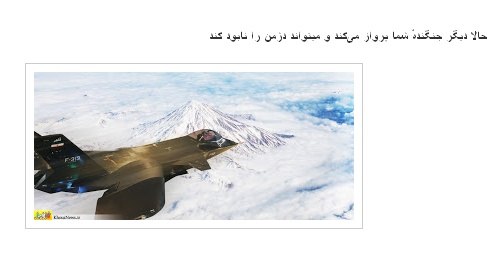
Remember how Iran rolled out its deadly new stealth fighter a few days ago? The one that had about as much chance of flying as a Ford Pinto? Well, the Internet was quite aflutter over how there was basically no chance the F-313 could either avoid radar or fly, let alone both. Iran's response yesterday is equal parts troubling and hilarious.

They released this photo as proof that screw you, Internet, the F-313 is so totally a functional, deadly and awesome-looking plane.

Soaring majestically over its enemies, or maybe just big a mountain.


I... I don't... sigh. Here, let me use another picture to sum up my reaction.

I call it "the Iranian salute."

The issues with this, ahem, "proof" are so obvious that this Arabic-language blog, harfhaye-nagofte-elham, sums them up perfectly even if you don't speak Arabic.


Yeah, Iran. Really? What is the mindset behind releasing a photo like this that takes essentially no expertise to undress? Do you think the rest of the world--literally, everyone connected to the Internet--is that dumb?

My guess is no. This is more meant for domestic consumption. Which in many ways is even more troubling. Iran has good universities that produce lots of well-trained scientists and academics. The country's leaders must think tremendously little of their population if they expect them to believe this clumsy "look at me!" stunt is actually reality.

As far as PR exercises go, this is an abject failure. The external audience can see through it and laugh. The domestic audience can see through it and wonder why their government thinks they're simpletons. And there's not even any point in talking about it as a legitimate weapons program.

In short: no matter how you look at it, the F-313 just doesn't fly.

Wednesday, November 28, 2012

A tale of two centuries

I should probably stop harping on this, but I can't help myself.

This week, the Internet was all atwitter about China's flying a jet off of (and onto) its aircraft carrier, the Liaoning. I have written in some depth about why the carrier itself is not a huge advancement or a threat. I also have tweeted a bit about why the flight ops are also not worth freaking out about.

But a defensetech post this morning really illustrates the differences between China's naval airpower and more established navies'.

China operated a jet off an aircraft carrier, which Britain did for the first time in 1945 (the Chinese jet's lead designer, by the way, died of a heart attack during the testing. True story.) Yesterday, the U.S. hoisted a totally new type of aircraft onto one of its carriers for sea trials.


It literally is the difference between 20th Century and 21st Century airpower. China is learning to walk; the U.S. Navy is learning to Gangnam Style while wearing roller skates.

I firmly believe that trade between China and the rest of the world--including the U.S.--precludes any war (if not dance battle) in the near future. China isn't exactly hurting for resources either. But if push came to shove, the Chinese military has a huge advantage in manpower, but not much else... no matter what the Internet tells you.*

*Except for this blog. Always believe what I tell you. One of us... one of us... one of us....

Sunday, November 18, 2012

The medicinal properties of passing years


In our travels--and especially during our time in the Middle East--Mrs. Blog and I have visited a lot of places with painful histories. Lebanon is a great example of this: although there is obviously a fair amount of tension beneath the surface, and violence occasionally spills over from Syria, it is a peaceful and calm place today compared with 30 or even 10 years ago. Beirut is a beautiful place filled with amazing art, friendly people, ancient sites and delicious food. But everywhere you go, you can see the scars of war. Sometimes it's figurative, in the form of monuments or signs. Other times it's literal: the bullet-pocked shell of the Holiday Inn still squats among luxury high-rise developments on high-priced waterfront real estate.

A building with a troubled past.

But in the formerly troubled countries we visited, America was never one of the major belligerents in the conflicts that had scarred them (although U.S. troops were obviously in Lebanon in 1982, Israel played the role of invader/occupier in that one). That changed with our recent, brief visit to northern Vietnam.

I'll keep this short and sweet: Hanoi is a friendly place. I didn't run into any lingering dislike of Americans, which, depending on how cynical you are, may or may not be surprising considering how many thousands of tons of bombs the United States dropped on and around Hanoi. This is possibly because in the end, the United States threw up its hands and left the country after realizing that getting involved in someone else's civil war was not worth American blood and treasure. If you're North Vietnam in 1974, that's victory. And it's easy to forgive when you're the winner. Maybe things would have been different if the Paris peace accords had held up, or a more Korea-like situation arisen through other means.

I can't say that I totally understand the complex psychology behind present-day attitudes. But I am glad the country seems to be at peace with its past. In any event, this picture sums up the result:

Photo courtesy iPhone of the Blog.

Those, by the way, are tourist boats cruising under a unified Vietnamese flag through a bay that empties into the Gulf of Tonkin.

So maybe there's no animosity because despite all the atrocities and bloodshed, things ended up right where both sides wanted them. In 1975, Ho Chi Minh was able to spread his banner of communism over the entire country. And the U.S. leadership of that era would no doubt have been thrilled to know that in 30 years, Vietnam would be home to a nominally capitalist economy (and the Soviet Union, the "head domino," would no longer exist).

Wednesday, November 7, 2012

That wasn't so bad

The 2012 U.S. presidential election is FINALLY over, and Barack Obama won in a relative snoozefest. No big surprises, unless you count the repudiation of all the anti-intellectual (and, really, counterfactual) backlash that sprung up against election data analysts like Nate Silver.

And then there's Florida. Oh, Florida, how you yearn to be at the center of electoral controversy. In my very first wet-behind-the-ears job out of college, I was an editor at the St. Petersburg Times. The year was 2000. The election was... complicated. Let's just say spending months trying to reframe the issue of "no one has any idea what is going on in Florida" in a story every day was taxing.

This year, of course, the sun is about to come up in Miami the day after the election and no one has figured which candidate carried the state. That came after days' worth of complaints about inaccessible polling sites and ridiculous lines for early voting. That's right, even when the election's outcome is not in doubt, Florida insists on being in the spotlight. What, LeBron James and Disney World aren't enough attention? Sheesh.

But like I said, aside from that this seemed to be a relatively painless deal. The same cannot be said, however, for what remains the best way of interpreting modern politics: the violent video game.


Let's do it again in 2016!

Wednesday, October 10, 2012

Read my lips! Or don't

As a guy whose hearing, shall we put it generously, "kind of sucks," I find myself reading people's lips without even realizing I'm doing it. In noisy bars, this can come in handy. While watching sporting events, it can be amusing: no, that coach wasn't loudly telling the referee to have a great day.

And during times like these (and by that I mean near the end of a long U.S. presidential election campaign), it can be hysterical. Because even though I KNOW Jim Lehrer isn't saying "and then when he died, they had him stuffed. Like that water buffalo--stuffed." his lips sure are moving in a way that closely matches those words. It also helps that I am a sucker for absurd humor.


To put it another way, this made the presidential debate not just watchable and entertaining, but possibly even more informative than the real thing... even without sound.

Wednesday, October 3, 2012

Politics is a bloodsport


As I have mentioned before, it is kind of a blessing living overseas during a presidential election year: not only is voting easier but we are spared the barrage of campaign commercials.

I'm sure politics has actually always been like this, but to my eye it has become much more polarized--a sport rather than a discussion of competing ideas--and vitriolic. That makes it less interesting and more annoying. It is often juvenile and easy to ignore.

So let's talk about juvenile behavior for a minute. Way back in the day, I spent four summers taking some classes in North Carolina. We were a bunch of junior high and high school students basically living like college students: on our own except for showing up to class and meals. And after lunch, there would invariably be a crowd of people gathered around the cafeteria's Mortal Kombat machine. Oh, how we would drop quarters into its bottomless maw.

I was terrible at it, of course. I could barely make the characters punch and kick, let alone pull off the complicated combination of button pushes and joystick tugs that would trigger a signature move. It was fun (and oddly social) to watch, but not very interesting to play.

But today, I was introduced to a project that made both the video game and politics seem... well... awesome. Behold:


Paul's "church and state" move and "red vest straitjacket" seem unbeatable, honestly. But Romney was able to easily fight off him and Herman Cain's "creepy ad" power move. Impressive! And round 2:


There are a lot of cheap shots, but hey--art imitates life, right? And the Republican primary was indeed pretty brutal, rhetorically speaking. How will the rest of the battles shape up? We have less than five weeks to find out. Here's hoping the actual campaign has an exciting finishing move... except, of course, with a lot less blood.

Monday, October 1, 2012

Whatever floats your boat


China has been in the news a lot lately. The presumptive next president, Xi Jinping, disappeared for a bit last month. The country was kept in the dark about the Communist Party meeting in which the country's leadership will be swapped out, then told it would be delayed until November. The economy continues to sputter.

But the most important news of all--if you get your news from Chinese media--is a fancy new aircraft carrier that was officially "launched" last week. Here's the thing, though. It's not fancy. It's not new. It's not armed. And there is no one trained to use it.

You would never know this from all the attention it is getting, though.

The aircraft carrier was originally launched by the Soviet Navy in 1988. But of course the Soviet Union was in its last days at that point, and the ship--eventually christened the Varyag--was never fully outfitted for combat. By the mid-90s, it had been stripped of pretty much any useful machinery, including engines. And in 1998, China bought it.

That's the provenance of the Chinese carrier, now called the Liaoning. Now let's talk about its capabilities.

As designed, it was essentially a complement to a larger fleet, not the centerpiece of a battle group. Its lack of catapults limited the types of planes it could use; essentially, it could provide combat patrols over the fleet and conduct limited anti-ship or interdiction missions with its two dozen or so aircraft. In short, its purpose is not to project massive offensive firepower, but to provide cover for missile cruisers. (Indeed, another type of Soviet carrier tried to combine both roles.)

Ski jump: great for catching righteous air, but not for launching righteously large aircraft.

This is a sharp contrast to U.S. carrier design. America basically fields two types: supercarriers and amphibious assault craft.

Supercarriers--typified at the moment by the Nimitz class--are meant to project power. They are the focal point of a carrier strike group, which involves other surface ships and submarines, and are what battleships were 75 years ago: the big guns. They carry nearly 100 aircraft, including strike fighters, airborne warning and control planes, electronic warfare, helicopters, and so on. Because it is catapult-equipped, it can also launch heavier air-refueling tankers--and that means the carrier's fighters can theoretically strike targets or patrol airspace over a thousand miles.

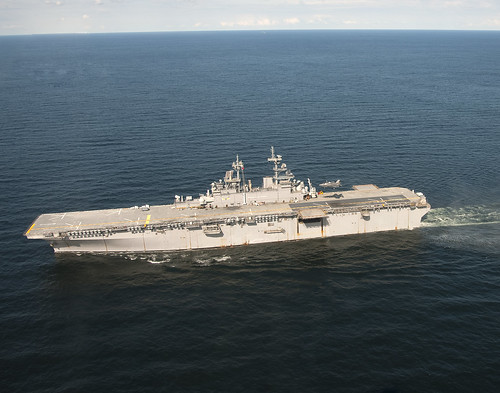
Amphibious assault craft are the province of the U.S. Marines and can be equipped in a variety of ways. Overall, though, the Wasp class carries a mix of several dozen fixed-wing aircraft and helicopters, plus a bunch of Marines and a complement of amphibous-landing craft: either LCAC hovercraft or other vehicles.

They also are used to test-fly awesome-looking next-generation fighters.

The Liaoning is nearly the length of a Nimitz-class ship--just a few hundred feet shorter at the waterline. It's a bit heavier than the Wasp class, weighing in at about 50,000 tons compared with 41,000. (Nimitz-class ships typically displace more than 100,000 tons.)

But the important point here is that it is a military match for neither. The nuclear-fueled Nimitz can travel indefinitely, limited only by food supplies. The Wasp has a range of more than 9,000 nautical miles. The Laioning has a range of only 3,800 nautical miles.

Worse, it can't land troops like the Wasp, nor can it control as much airspace as a Nimitz. Designed to protect other ships, the Laioning would essentially have to devote its entire air wing to protecting itself, leaving it with no offensive firepower to spare. In short, it can't project power or even provide a punch beyond what a group of missile cruisers would give on their own. It is a target.

Unfortunately for the Liaoning, that's not even the end of the story.

This is China's first aircraft carrier. That means that the military must now train several thousand seamen to operate the thing--no small feat considering the number of moving parts in modern carrier operations. With such a tiny margin for error and lots of munitions and jet fuel around, mistakes have major consequences. And actually landing on a carrier? That's one of the most difficult feats in aviation. Chinese pilots must be trained to fly carrier-capable aircraft. That aircraft will be the J-15, a copy of the Su-33. And the thing about the J-15 is that it doesn't exist yet.

To sum up, China now has a 25-year-old carrier that can't go very far and has no airplanes or trained pilots to fly them.

In the PLAN's defense, you have to start somewhere. The Liaoning is, at its heart, a proof-of-concept system. Crews will train there, the J-15 will eventually be test-flown there and a decade or so down the line, the navy will have the capability to run a combat-capable carrier. Is the Liaoning that carrier? Not a chance.

So why all the fanfare about this thing? It's simple. If China can get the world to worry about its aircraft carrier, bigger threats--like economic slowdowns and messy power transfers--will disappear in its wake. And that's more dangerous than the Liaoning will ever be.

Friday, September 28, 2012

Democracy in action


My fellow Americans (and everyone else), I come before you today to discuss that most American of all Greek-invented activities: voting. It is an act that is simple on its face--voicing support for someone to represent you in creating legislation and governance--but complex in execution and effect. Sometimes there's no one out there who represents your ideals. Sometimes the person who DOES represent your ideals has no shot of winning. And sometimes the person you vote for and wins ends up not really doing what you expected.

All part of the process. It's one I have been enjoying and growing into for nearly two decades now. Living abroad has given me a different perspective on democracy in a lot of ways, of course; in the Middle East, democracy doesn't really exist, so it was always interesting to explain to people that, in my opinion, it was better for people in a given country to be able to peacefully kick out whoever was running the country than to just allow someone to be in charge because of their surname. The results are messy and almost always imperfect, but on the whole, pretty nifty.

This year will be the first time I vote in a general election while living overseas. I know, I know… there was a congressional election in 2010, and I am a terrible American who did not participate. This was not out of protest or apathy, but simple laziness. As a citizen relatively new to overseas life, it seemed impossibly difficult to, you know, vote from 5,000 miles away.

The reality, though, is that it is impossibly easy to vote from 5,000 miles away. Or 7,000 miles away, as the case is now in 2012. You tell your most recent voting jurisdiction where you are--via a form you can e-mail--and that you would like a ballot. They e-mail you the ballot. You fill out the ballot and mail it back. The end. Democracy rules!

What democracy looks like.

If anything, it's actually easier than voting in the U.S., which requires me to do insane stuff like leave the house, walk a few blocks and wait in line for 10 minutes. And if you thought living 15 hours (direct flight!) from the continental U.S. meant I was far removed from the craziness of campaign season, think again. Mitt Romney had a fundraiser here in Hong Kong on Thursday night.

Wrong flag. But hey, there weren't any pictures taken at the fundraiser, so what do you want from me?

And there's one other interesting issue at play here. About 5 million Americans live outside the United States. If, like me, they are casting their ballots now, the homestretch of the campaign--including all three presidential debates--simply does not matter. I guess that's a good and a bad thing. On the one hand, if everyone in the U.S. voted early, it might mean a little less money spent on incredibly annoying partisan advertising. On the other hand, it might also just mean that most people have their minds made up already, no matter how hard any candidate campaigns. So much for intellectual discourse and persuasion.

Whatever. What it means for me is a lot more obvious: I get to cast my vote, then sit back and watch (or ignore) the fireworks.  And because I live 7,000 miles away, those fireworks will occur around breakfast time on Nov. 7. Breakfast fireworks and easy voting: now that's a platform anyone could get behind.

Tuesday, September 11, 2012

An aviation fairytale

Once upon a time, in the midst of the Cold War, there was a class of aircraft called "interceptors." These high-flying birds were designed to do exactly what it says on the box: intercept incoming strategic bombers.

Oh, how they were popular. The U.S. rolled out a huge number of models--exotic beasts like the F-104 Starfighter (basically a big engine with small wings) and more conventional models like the F-106 Delta Dart. The Soviets eventually fielded their brute-force MiG-25, which could touch the edge of Mach 3 if you didn't want to bother using the engines ever again. The British had the sleek Electric Lightning.

And the Canadians had the F-101 Voodoo. But for a second there, it appeared they were going to have an indigenous design... an aircraft called the Avro Arrow that would have been among the most advanced of its day.

How advanced? It was designed to travel twice the speed of sound and carry up to eight air-to-air missiles, or four unguided nuclear air-to-air rockets. It could cruise above 50,000 feet, albeit with a combat radius of less than 400 nautical miles. But hey, that was fine, as all you were doing was scrambling to blow up bombers before they got around to the business of bombing.

 
One sleek-looking snowbird.

It was, controversially, canceled in favor of buying the Voodoo, which isn't exactly in the pantheon of amazing flying machines. And these days, no modern military really uses single-purpose interceptors, as that role has largely been taken up by long-range surface-to-air missiles that are much cheaper and more effective.

So, it appears, the Avro Arrow is a footnote to aviation history. But! Some Canadian politicians, unhappy (as many are) with the cost of the U.S.-built and as-yet-undelivered F-35, say there is good reason to revive it. They argue that a re-designed Arrow could not just replace, but outperform the Lightning II.
Mr. MacKenzie said the proposal he’s put before the Harper government is for a made-in-Canada plane that could fly twice as fast as the F-35 and up to 20,000 feet higher. It would feature an updated Mark III engine and its range would be two to three times that of the F-35.
Well, now. Those are some serious claims. Yes, the F-35 has been enormously expensive and isn't exactly running on schedule, but could it be outgunned by 1950s-era technology?

The answer, let me assure you, is a "NO" the size of a Tu-95.

As another commentator pointed out, "twice the speed" of the F-35, currently listed at more than Mach 1.6, is obviously a minimum of Mach 3.2. Guess how many jet-powered aircraft have managed sustained speeds that high? One. The awesome and awesome-looking SR-71. It was purpose-built for that speed, which entails enormous heat and aerodynamic forces. It carried cameras, not weapons... although an interceptor version was considered. And although it was impervious to any SAM systems of the late 20th Century, flying too high and too fast to get hit, that is almost certainly not the case today.

The SR-71, by the way, was retired because its job could be done more cheaply by satellites.

Which is a shame, because did I mention it was awesome-looking?

The other performance stuff the New Arrow's supporters note seem equally unlikely. A ceiling 20,000 feet above the Lightning II's is 80,000 feet, which also happens to be in the flight realm of the SR-71, and pretty much no other aircraft. Similarly, a combat radius three times that of the F-35 would be about 1,500 nautical miles... a range nearly four times that of the original Arrow and 50 percent more than the closest thing to a modern interceptor these days, the F-15 Eagle.

So to recap, a 1950s airframe will be magically updated to fly higher and faster than the current world record holder, and have more range than one of the most effective combat aircraft in history. That's leaving out the question of avionics--the F-35s are among the most advanced in the world out of the box--and stealth.

I hope no one in the Canadian government is taking this proposal seriously. The Arrow is a neat-looking plane and it's a shame it never really got off the ground. But reviving it in a 21st Century combat environment makes about as much sense as a flying submarine.

Tuesday, November 29, 2011

Playing with fire

I'm not thrilled that this is happening just a few hundred miles away from my (brand-new!) front door, and I'm not celebrating the loss of life, but I have to say I saw it as good news when I read that an Iranian missile base blew up recently.

An Iranian military compound that blew up earlier this month was extensively damaged, the Institute for Science and International Security said after an analysis of new satellite imagery.

ISIS compared a November 22 image from DigitalGlobe to one from September.

"Some buildings appear to have been completely destroyed. Some of the destruction seen in the image may have also resulted from subsequent controlled demolition of buildings and removal of debris. There do not appear to be many pieces of heavy equipment such as cranes or dump trucks on the site, and a considerable amount of debris is still present," according to the analysis posted on ISIS website.

Senior defense officials told CNN's Barbara Starr that the United States believes the Iranians were mixing volatile fuel for a rocket motor for a large ballistic missile on November 12 when the accident occurred.

If nothing else, this is a sign that technology sanctions really do work. A modern economy with reasonable resources can develop stuff like low-performance aircraft and short-range missiles without too much trouble. But long-range rocketry is a totally different beast.

It took the U.S. years of launchpad explosions and downrange failures before it was able to reliably get stuff into orbit. I hope Iran, which has access to a tiny percentage of the human capital and materiel of a 1950s United States and is choked off from buying many of the parts it needs, continues to be a lot farther away from that goal.

Monday, May 2, 2011

He falls away into the dustbin of history

It has been a busy spring in the Middle East. Waves of revolution, civil war and regime change have reshaped the region in ways that few would have foreseen even five years ago.


And now there's this: Osama bin Laden is dead. Shot in the head by U.S. Special Forces and, according to some accounts, buried at sea to simultaneously measure up to Islamic traditions and avoid creating a terrorist shrine.


Aftermath.


I can't remember exactly how long it took to identify him as the mastermind of the attacks on September 11, 2001. I can remember how that day felt. Awakened by a phone call in the early hours of the day, I listened groggily as a good friend of mine described a plane hitting the World Trade Center. Then I watched in dismay as the second plane hit the other tower.


The rest of the day I spent on my couch, glued to the TV and wondering what would happen next.


I don't think it's fair to say that bin Laden's death has brought me--and perhaps anyone--real closure, to use an overused bit of psycho-jargon. Yes, he has been the face of global terrorism for the last decade-plus, but in the end, he's just a man. And more important, the ideology he represented has already taken a severe beating this year as mostly non-violent, mostly secular protests have toppled regimes against which al Qaeda has railed for years. Corny though it may sound, it has been a collective desire for freedom and fair representation that shoved longtime dictators from their pedestals, not bombs and extremism.


At the same time, though, I have some difficulty understanding the criticism of those celebrating in the streets of Washington and New York on Sunday night. One BBC viewer wrote:

One of my strongest memories from 9/11 is people celebrating around the world. I remember being disgusted. Now I have just seen Americans celebrating the death of Bin Laden outside the White House, I am again disgusted.

One of my strongest memories was the sense of shock and horror and loss as Manhattan was enveloped in a cloud of destruction. So I don't have much problem with people getting emotional at the death of the man who made that happen.


Here in the UAE, the reaction is that there is no reaction. Business, and life, have gone on as usual; my morning walk to work takes me through a muggy beehive of commerce and it was no different today than it is any other day. Furniture vendors and carpenters, most of them Pakistani, seemed unmoved by the news as they toted couches and ran planks through table saws. Even the government has, for the time being, remained silent.


I think Obama's speech this morning (late Sunday, U.S. time) hit a lot of the right notes and adequately summed up what transpired today.

It was nearly 10 years ago that a bright September day was darkened by the worst attack on the American people in our history. The images of 9/11 are seared into our national memory - hijacked planes cutting through a cloudless September sky; the Twin Towers collapsing to the ground; black smoke billowing up from the Pentagon; the wreckage of Flight 93 in Shanksville, Pennsylvania, where the actions of heroic citizens saved even more heartbreak and destruction.


And yet we know that the worst images are those that were unseen to the world. The empty seat at the dinner table. Children who were forced to grow up without their mother or their father. Parents who would never know the feeling of their child's embrace. Nearly 3,000 citizens taken from us, leaving a gaping hole in our hearts.


....


The American people did not choose this fight. It came to our shores, and started with the senseless slaughter of our citizens. After nearly 10 years of service, struggle, and sacrifice, we know well the costs of war. These efforts weigh on me every time I, as Commander-in-Chief, have to sign a letter to a family that has lost a loved one, or look into the eyes of a service member who's been gravely wounded.


So Americans understand the costs of war. Yet as a country, we will never tolerate our security being threatened, nor stand idly by when our people have been killed. We will be relentless in defense of our citizens and our friends and allies. We will be true to the values that make us who we are. And on nights like this one, we can say to those families who have lost loved ones to al-Qaeda's terror: Justice has been done.

And I think that's about right.


As I walk home today, through a city untroubled by the unrest that has gripped the rest of the region, I think it is safe to say that bin Laden's death has no direct impact on my life.


But it does feel like today's news was, if not justice, at least a just end for an incredibly malicious person, who twisted religion and snuffed out innocent life in its name.